
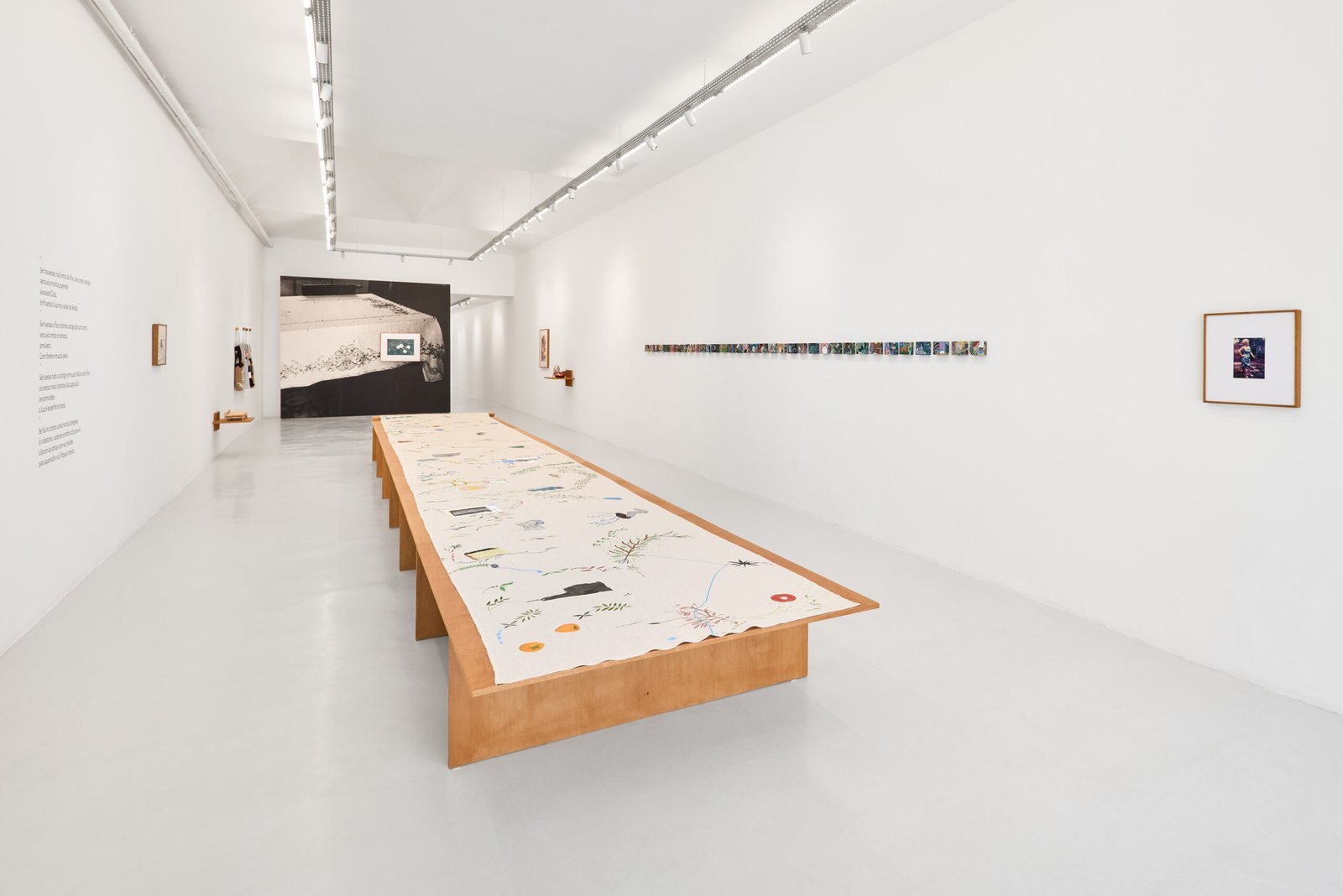
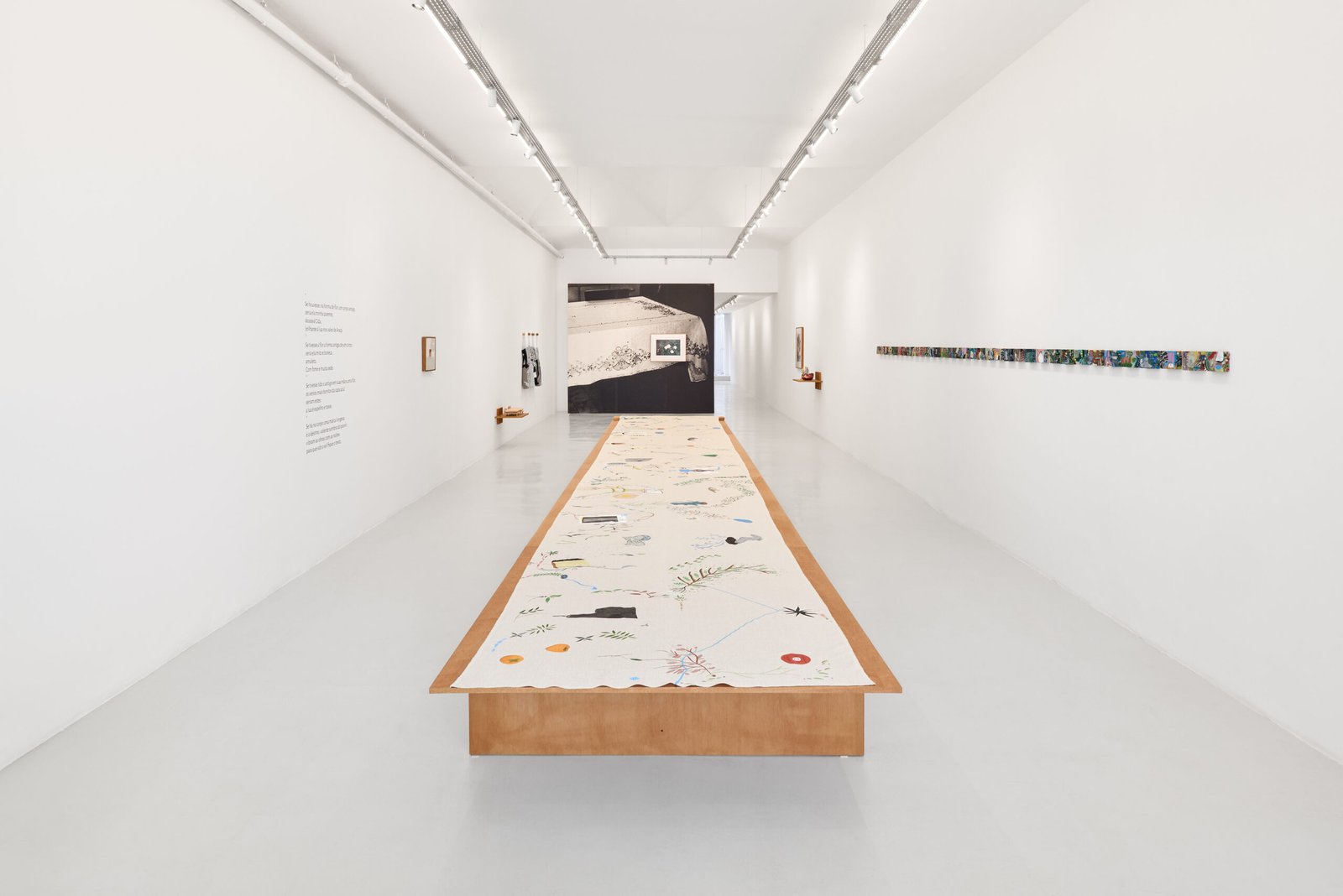
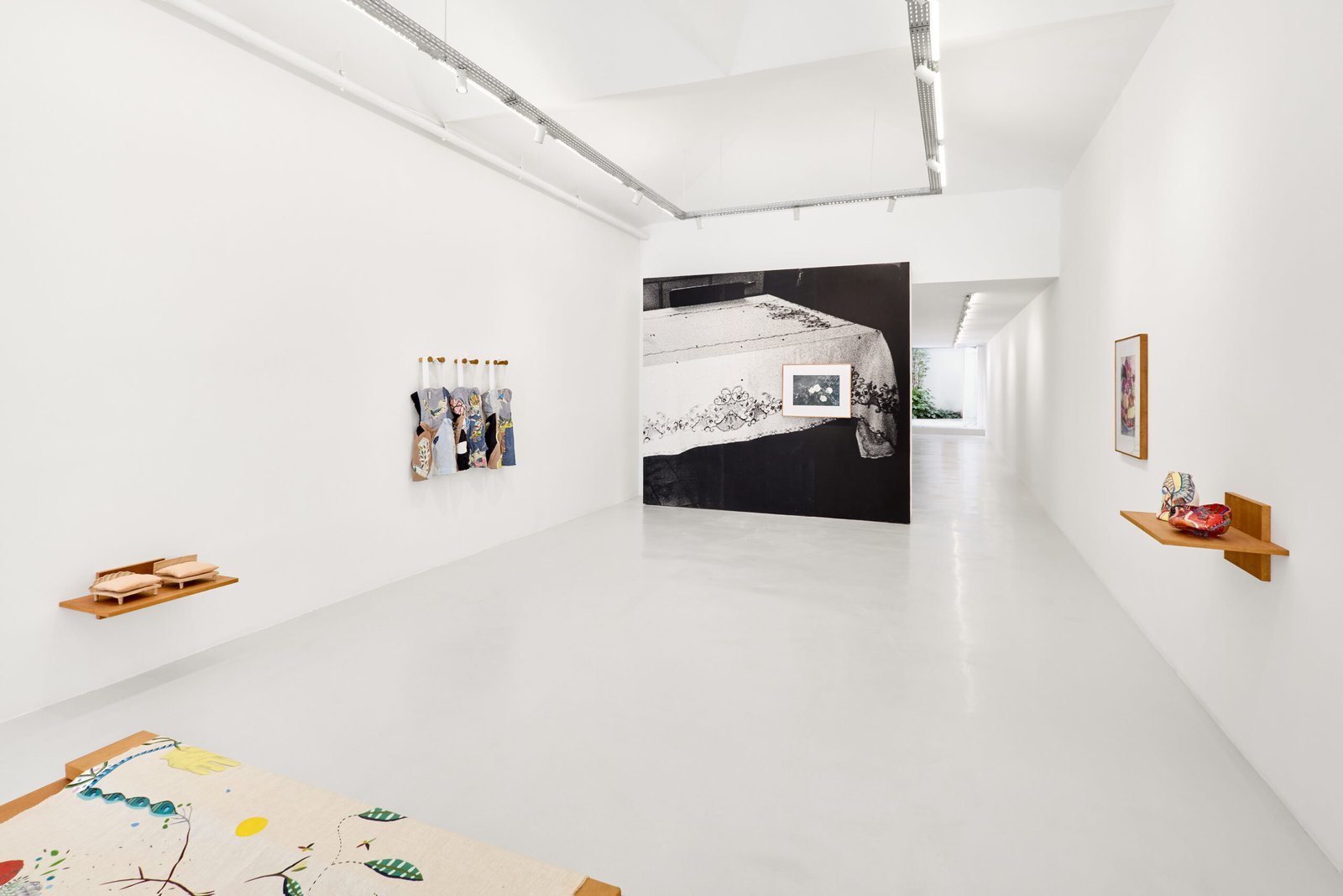
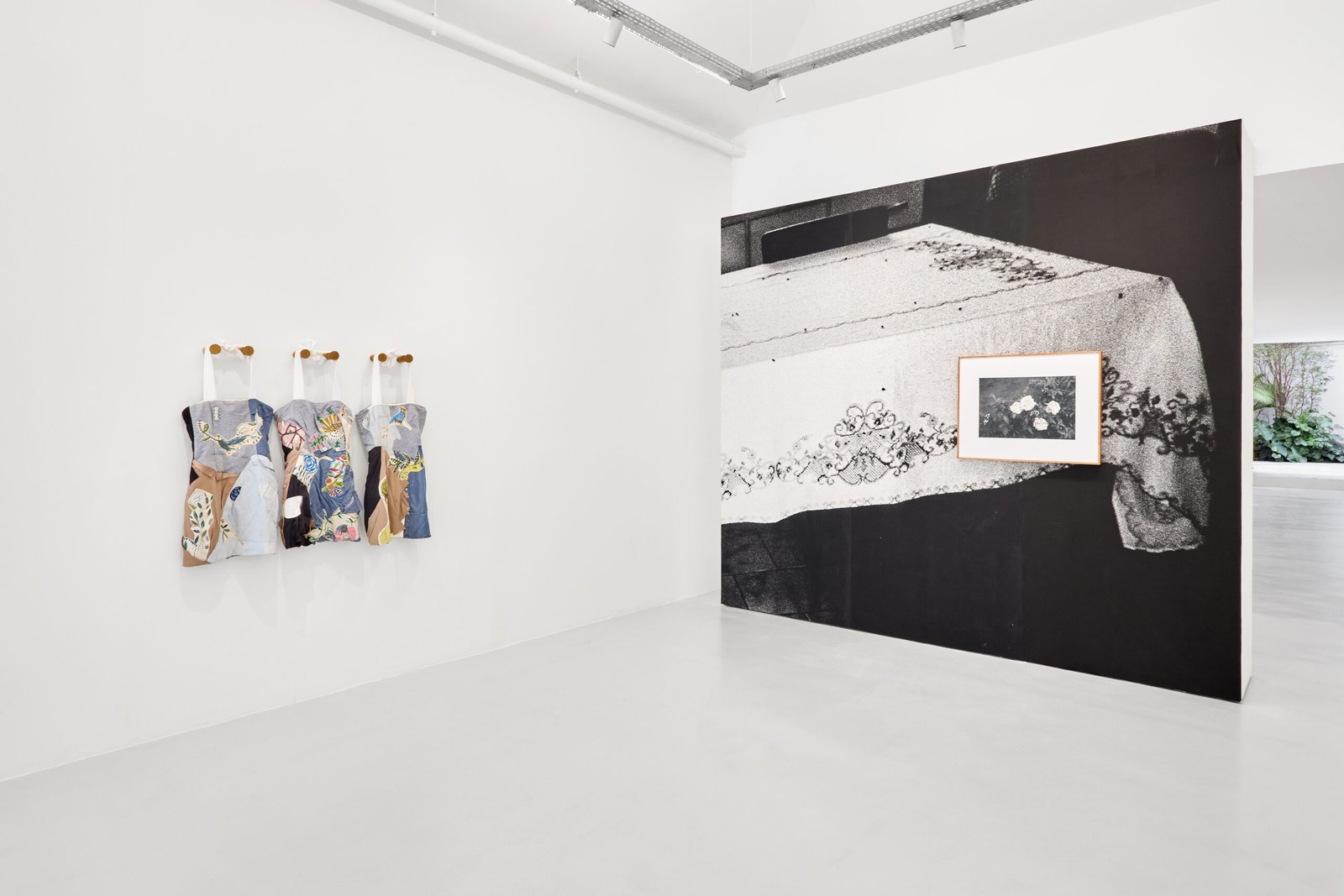
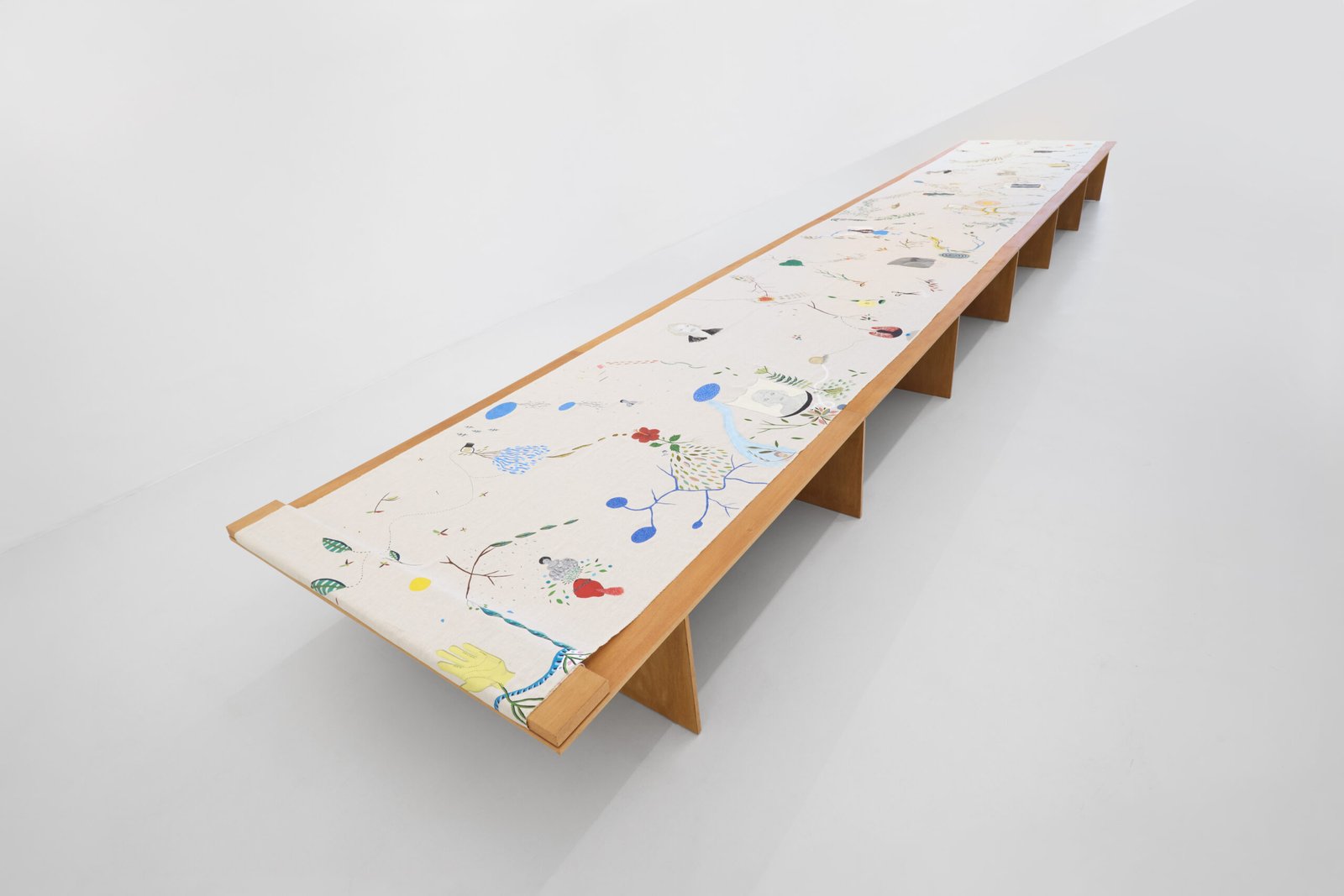
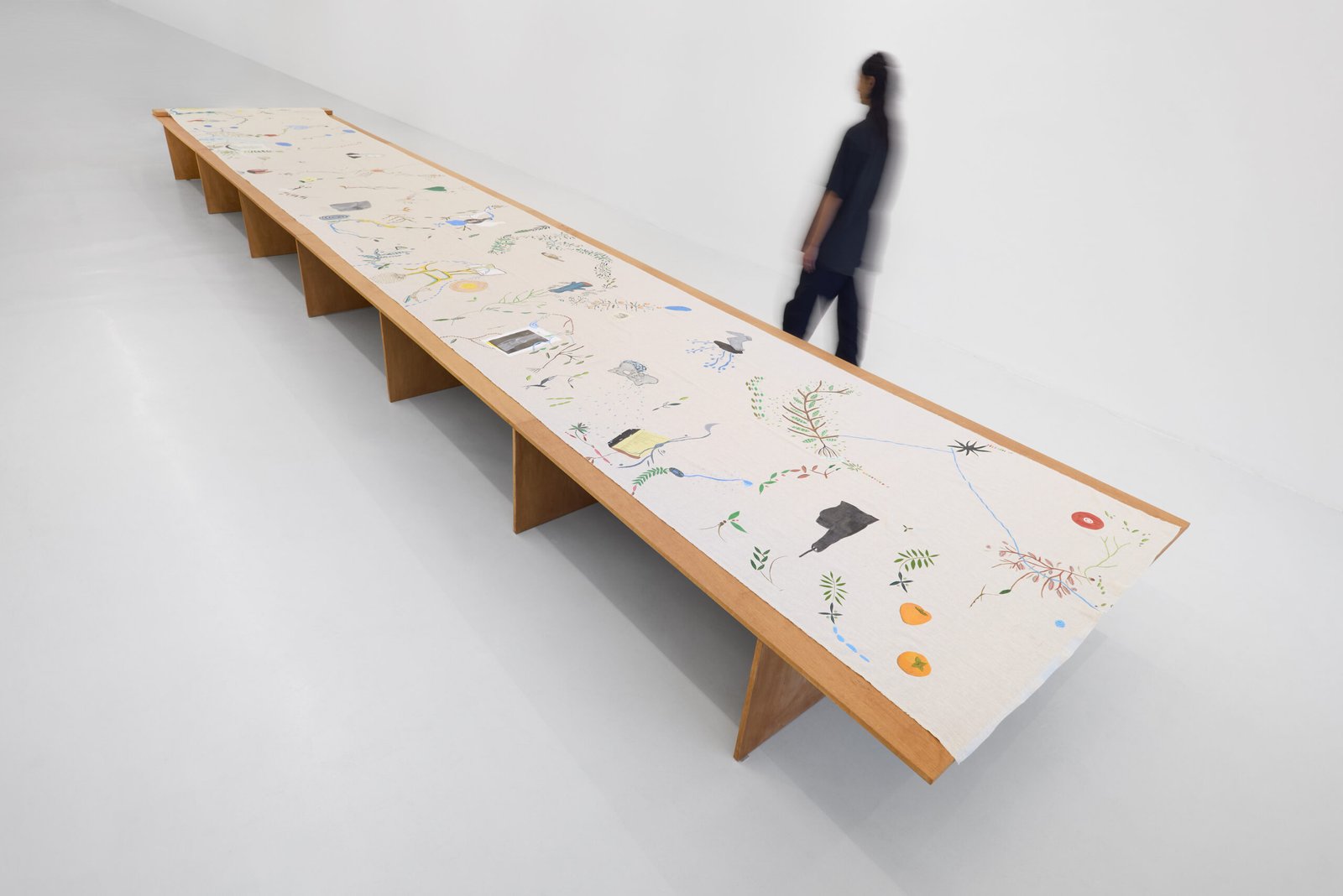
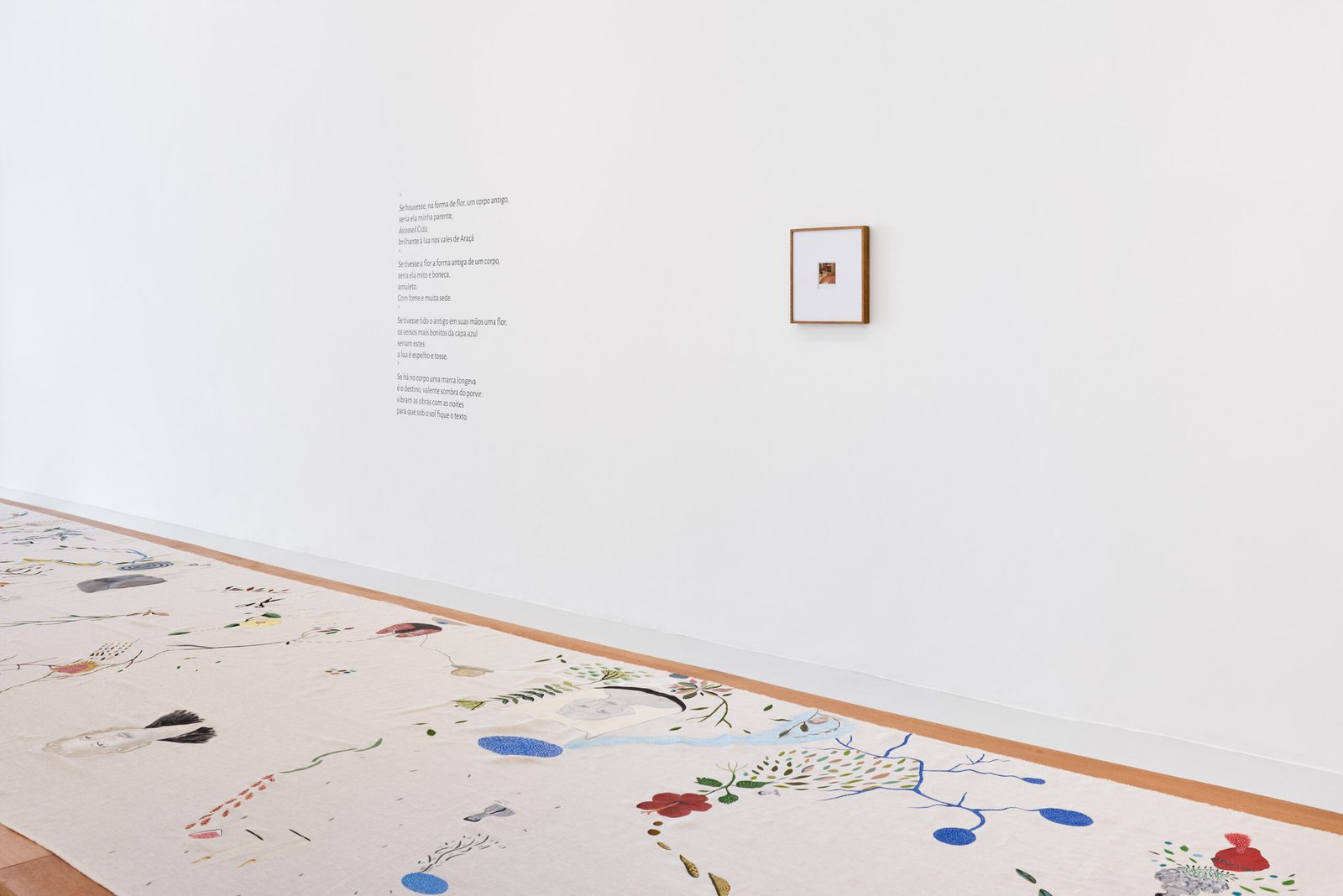
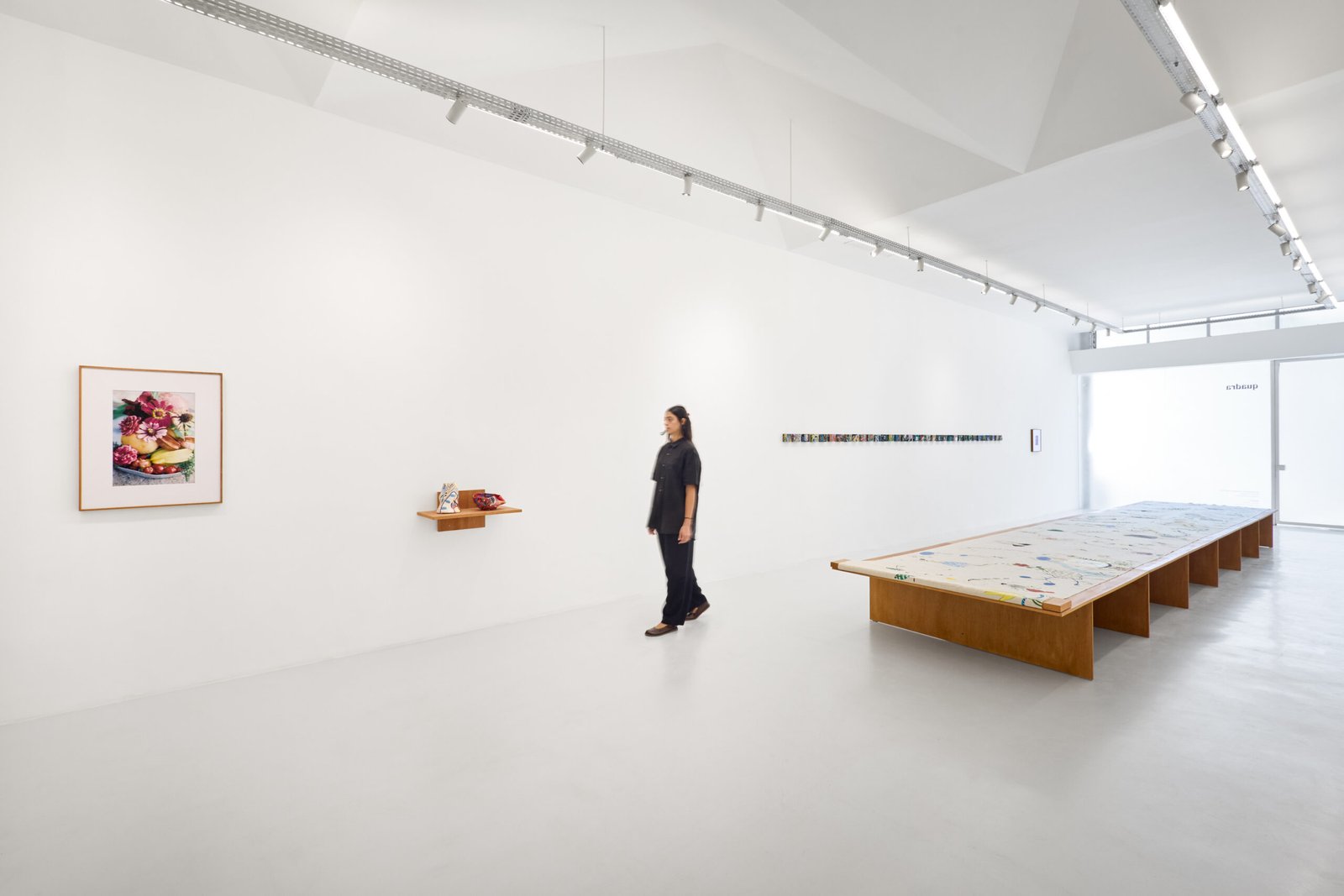
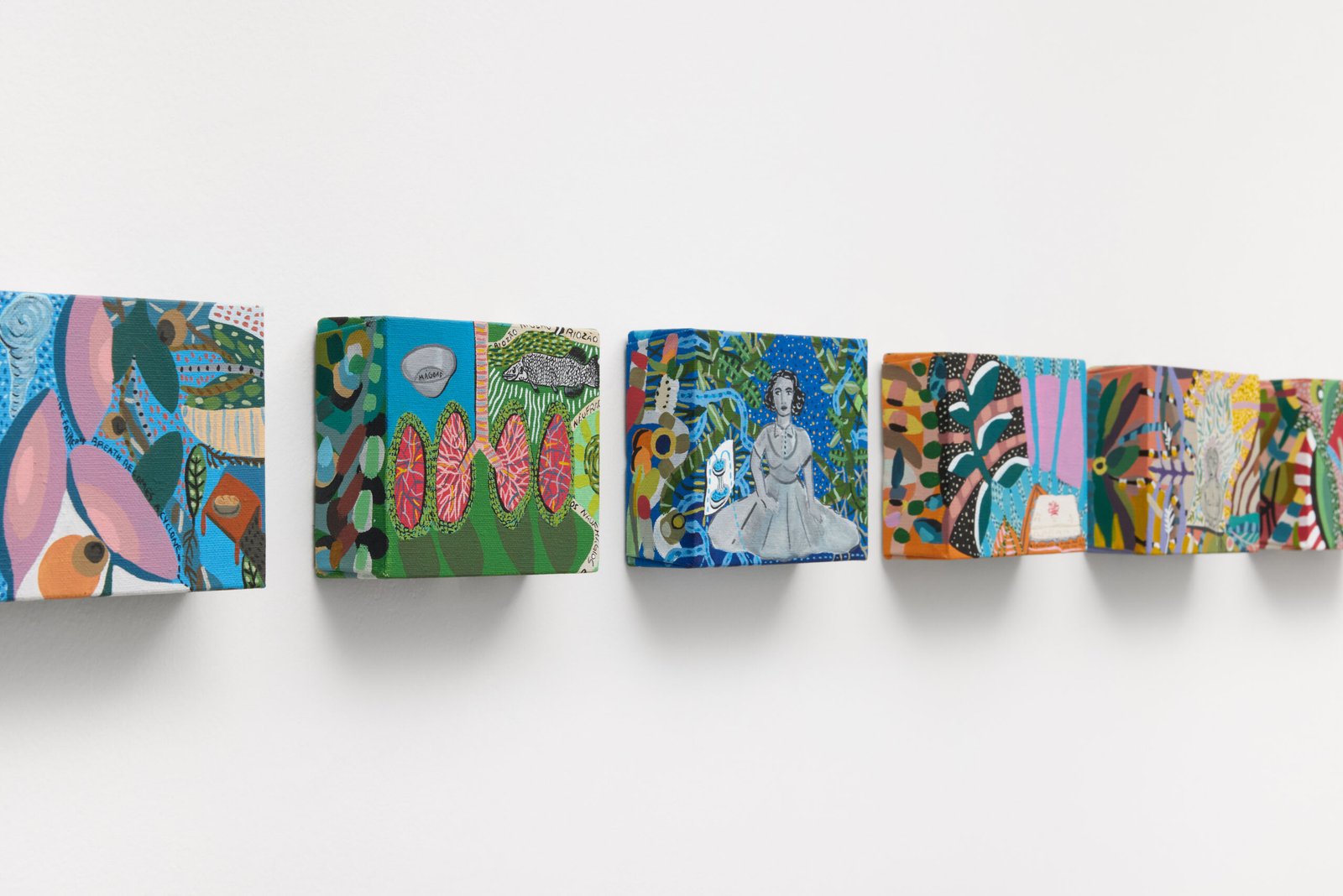
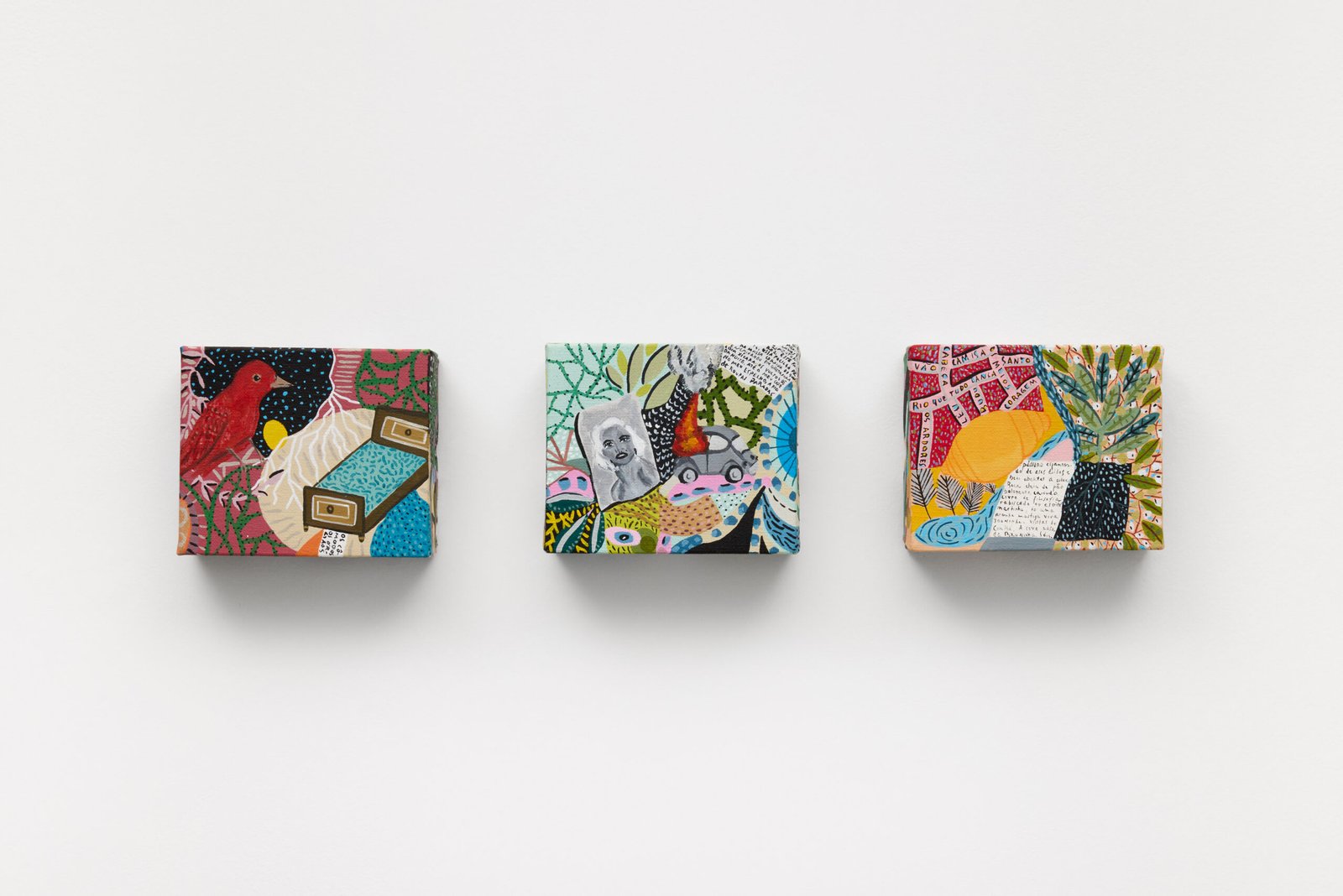
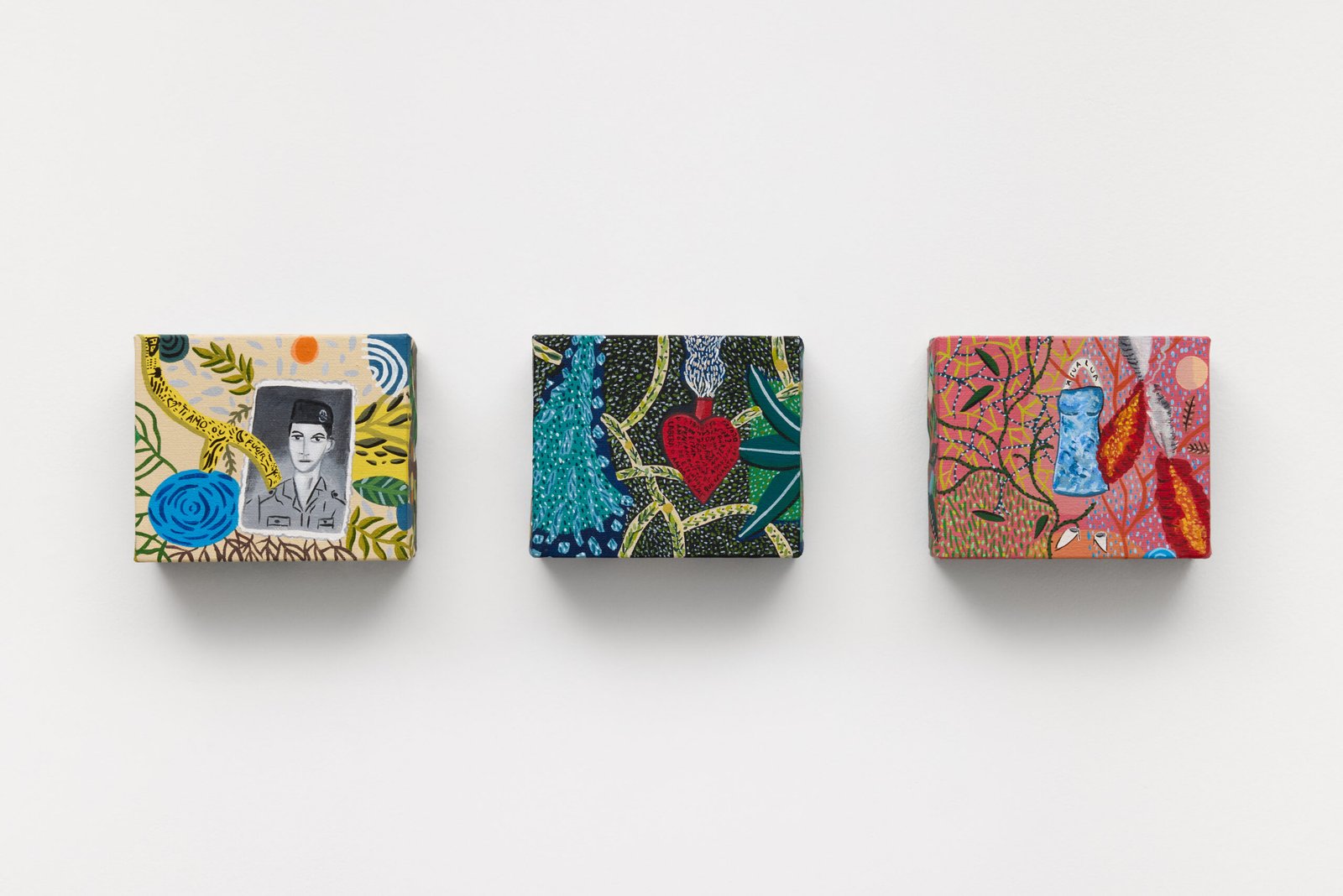
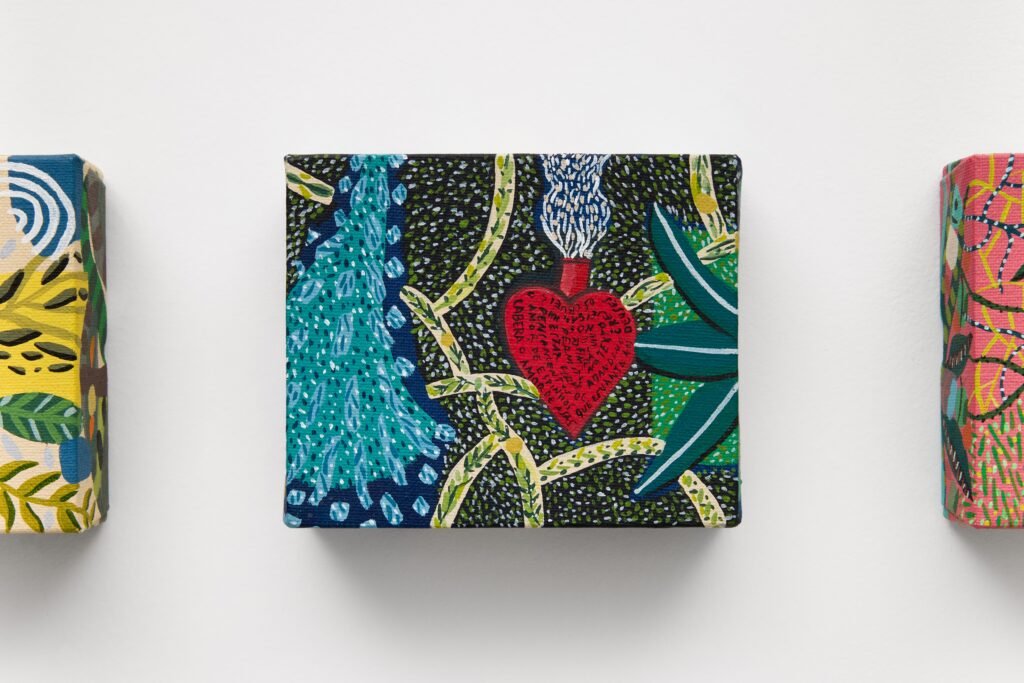
Quadra presents As cascas da Lua (cadouços para Cida), Matheus Chiaratti’s third solo exhibition at the gallery, curated by Luis Pérez-Oramas.
Bringing together a new collection of paintings, sculptures, photographs, and textile works, the exhibition expands on themes that run through the artist’s practice, characterized by the intertwining of literature, memory, and art history. In his practice, intimate narratives and cultural references are constantly rearticulated to shape images that inhabit an ambiguous zone between document and fiction, desire and remembrance.
As As cascas da lua (cadouços para Cida) also marks the third collaboration between Chiaratti and Pérez-Oramas, which began in 2021 on the artist’s podcast, Pivote, and led, in 2022, to the publication of the book Balada para Joey Stefano [Ballad for Joey Stefano], an unpublished poem by Pérez-Oramas accompanied by visual interventions and drawings by Chiaratti, (São Paulo: Quadra/Ikrek, 2022). As cascas da lua will continue in a second exhibition project to be held at Carmen Araujo gallery in Caracas, Venezuela. The encounter between artist and curator resonates in a shared interest in forms of poetic imagination capable of tightening the boundaries between memory, image, and narrative.
The exhibition constructs a universe traversed by relations between nature, eroticism, tragedy, emotional archaeology, childhood, and poetry. The title arises from an unexpected encounter between a photograph of the artist’s great-aunt, Cida, and the figure of Marilyn Monroe — an association that triggers an investigation into heritage, projection, and imagination. From this gesture, familiar characters, lingering objects, and fragmentary memories become starting points for the creation of new visual narratives.
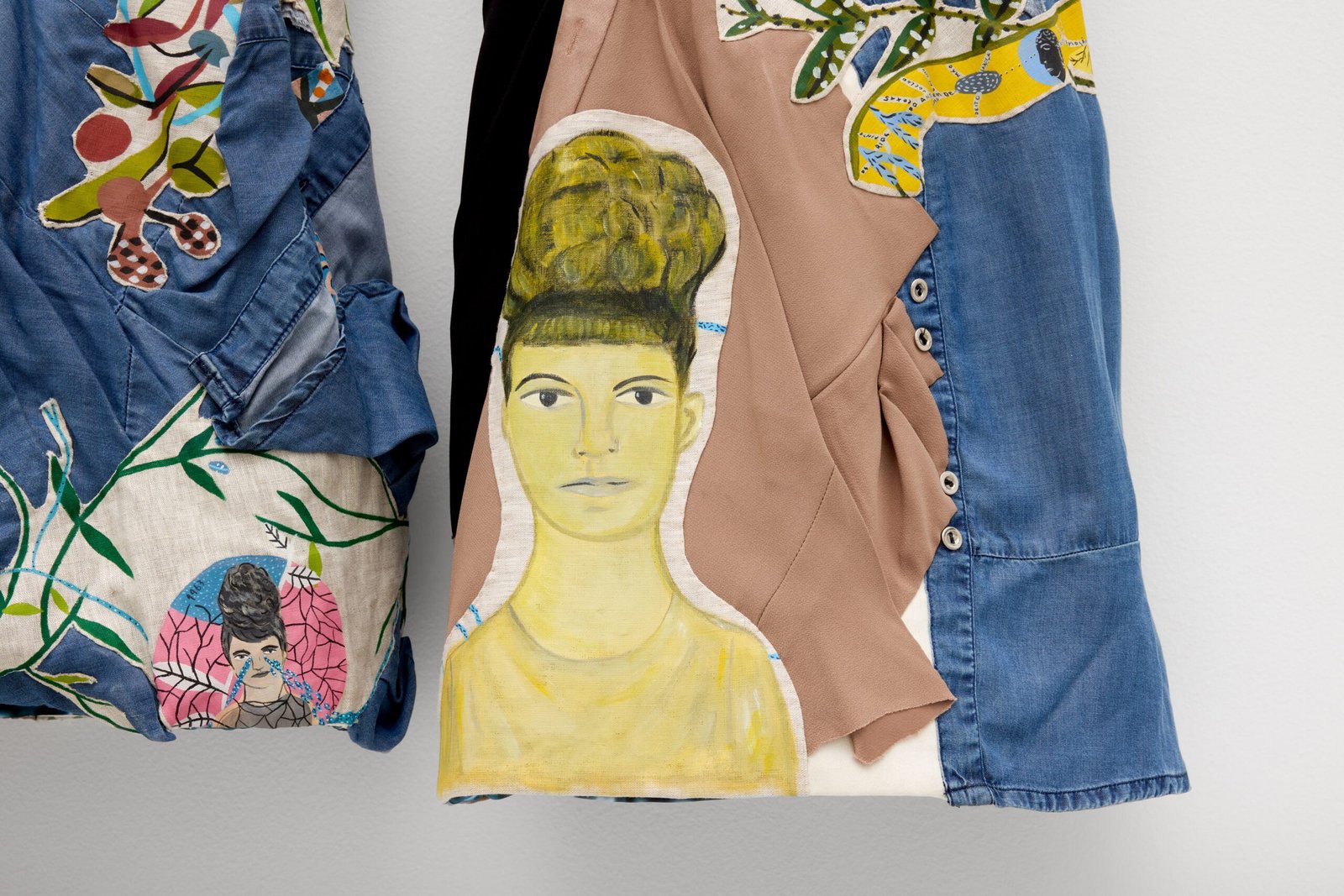
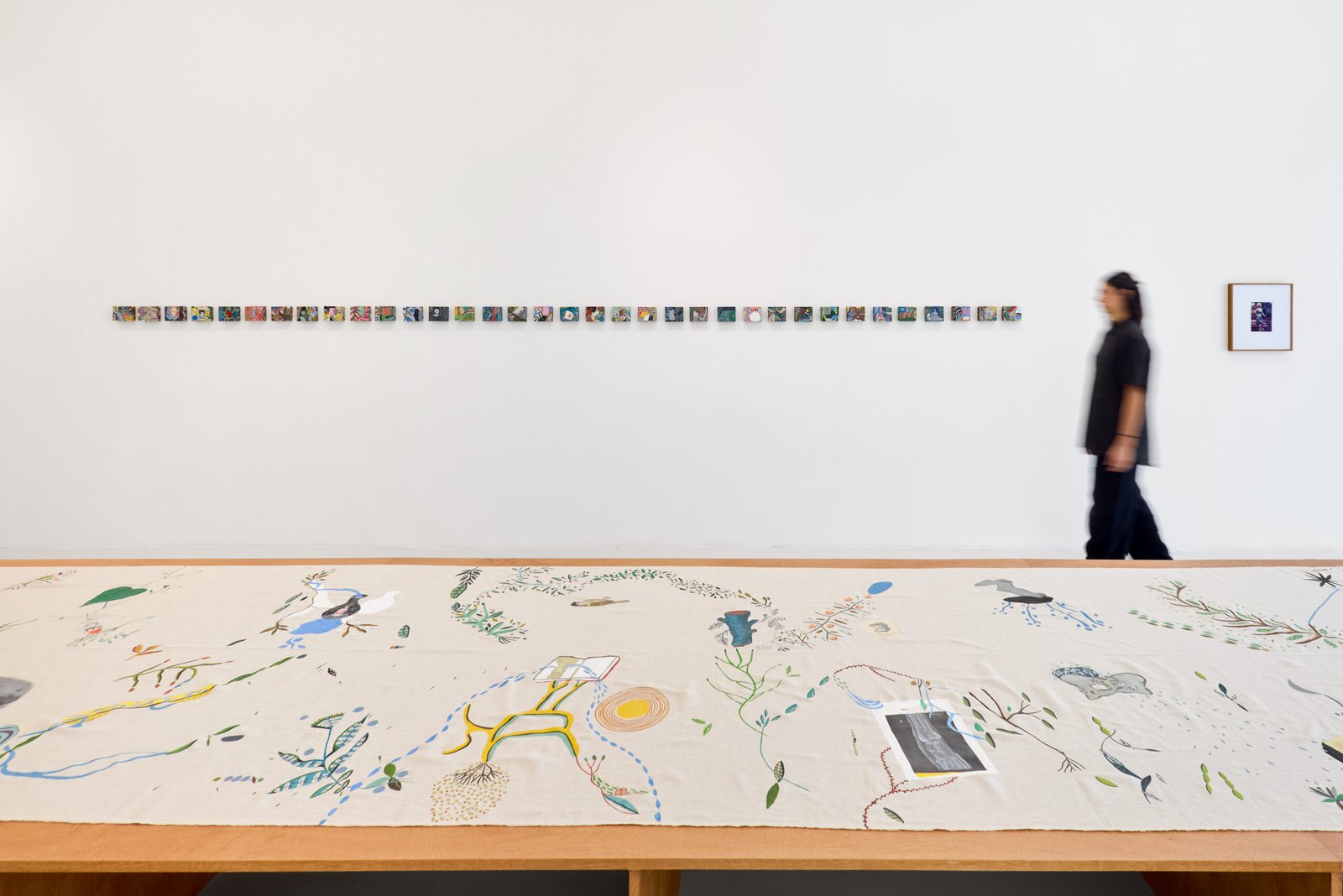
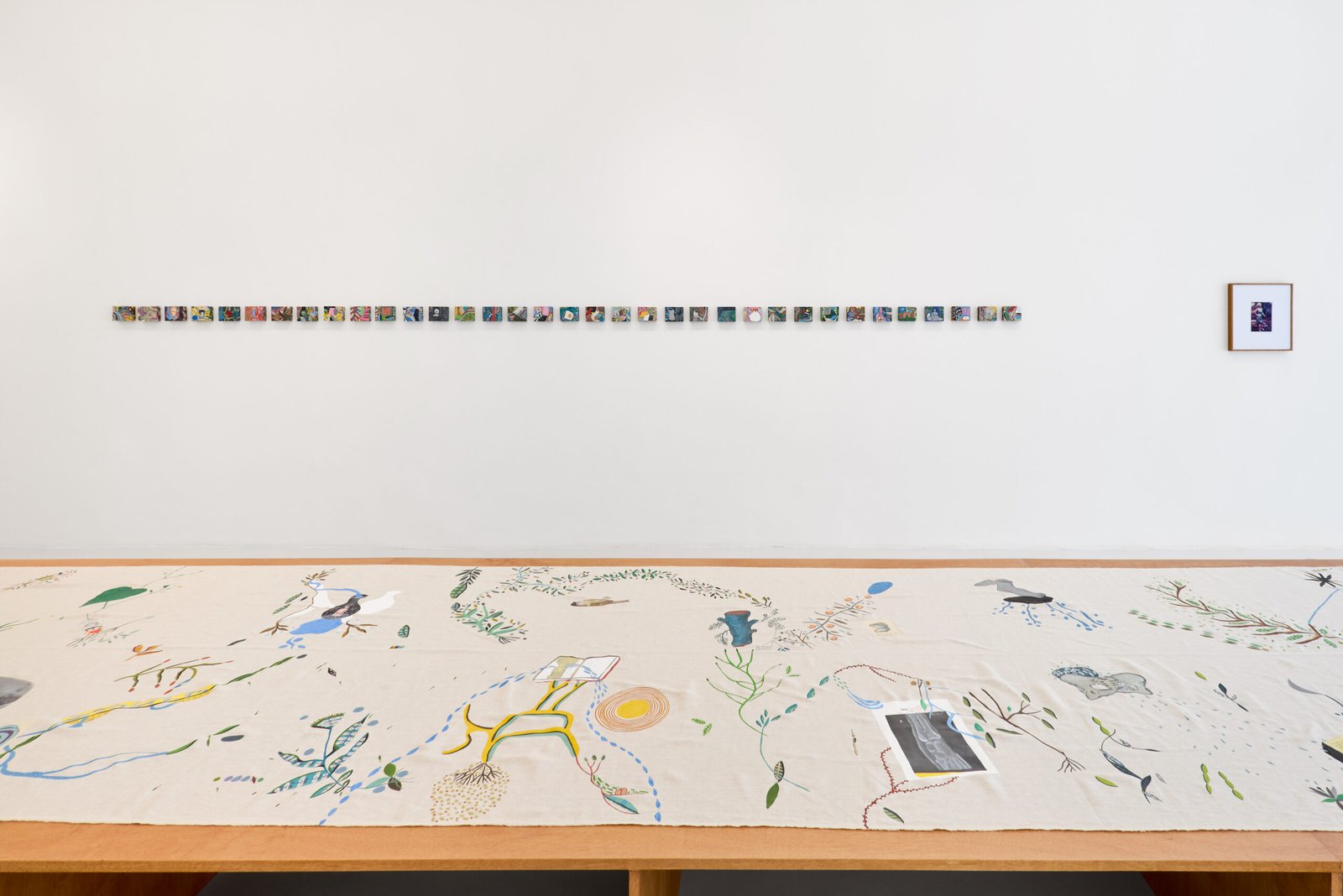
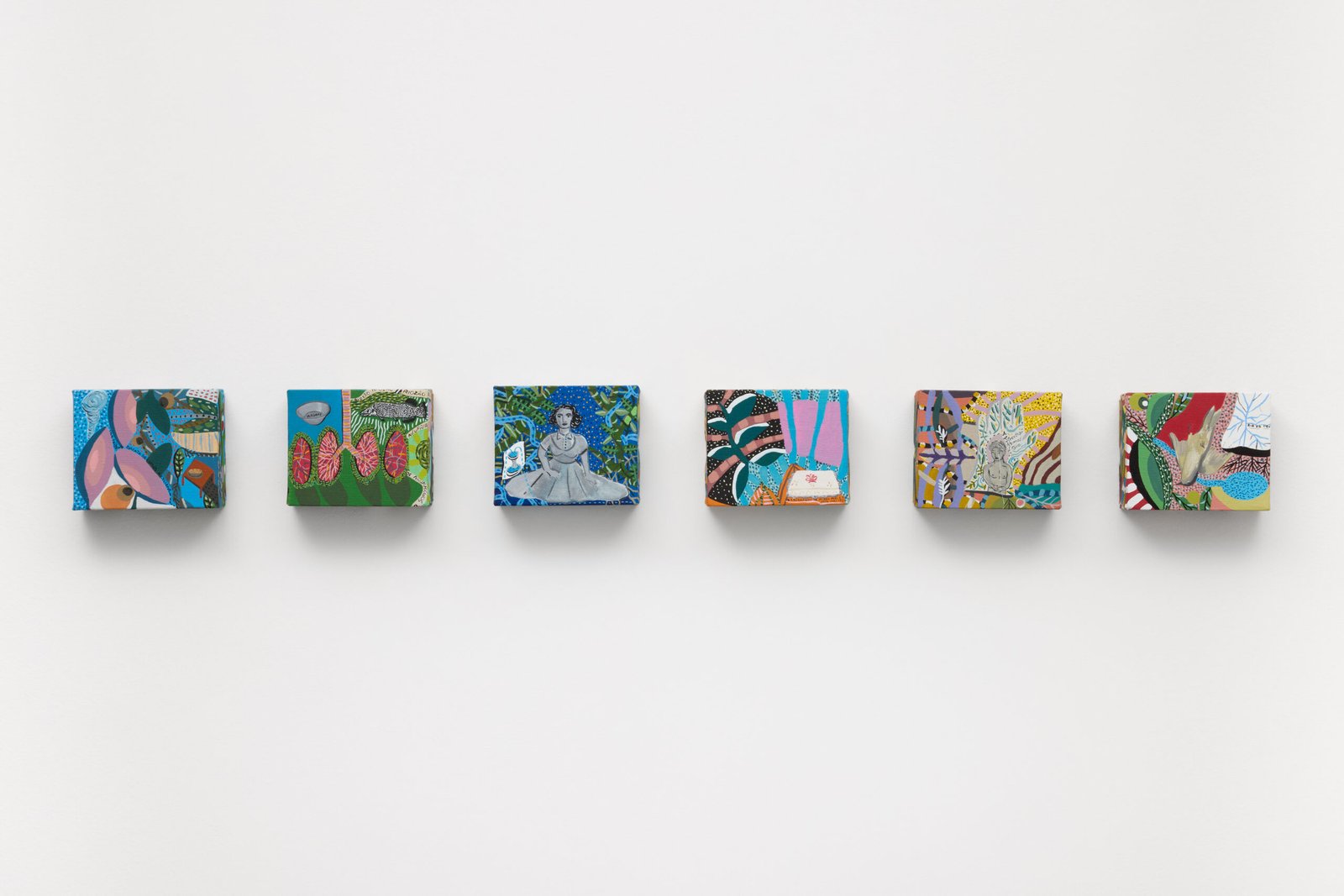
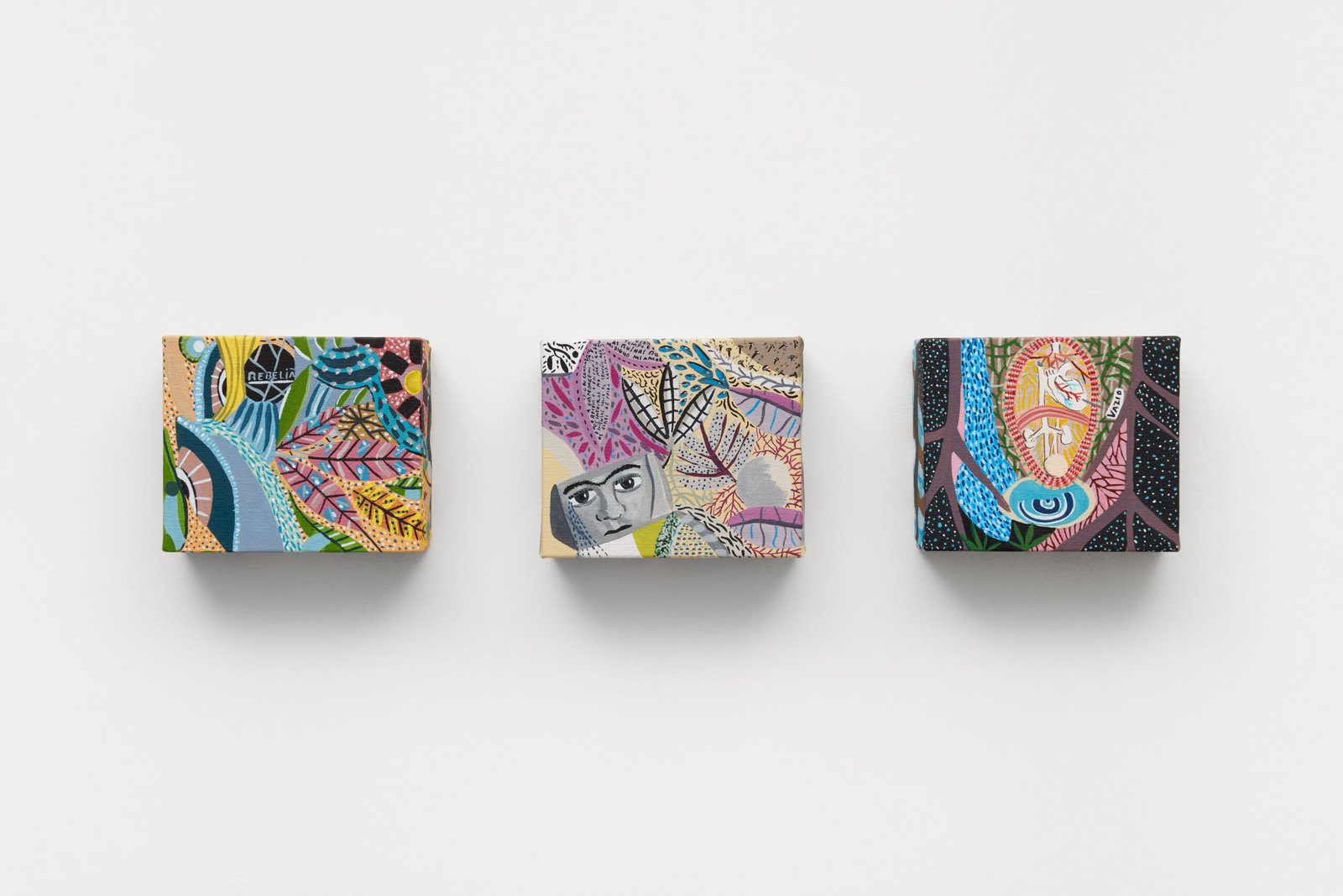
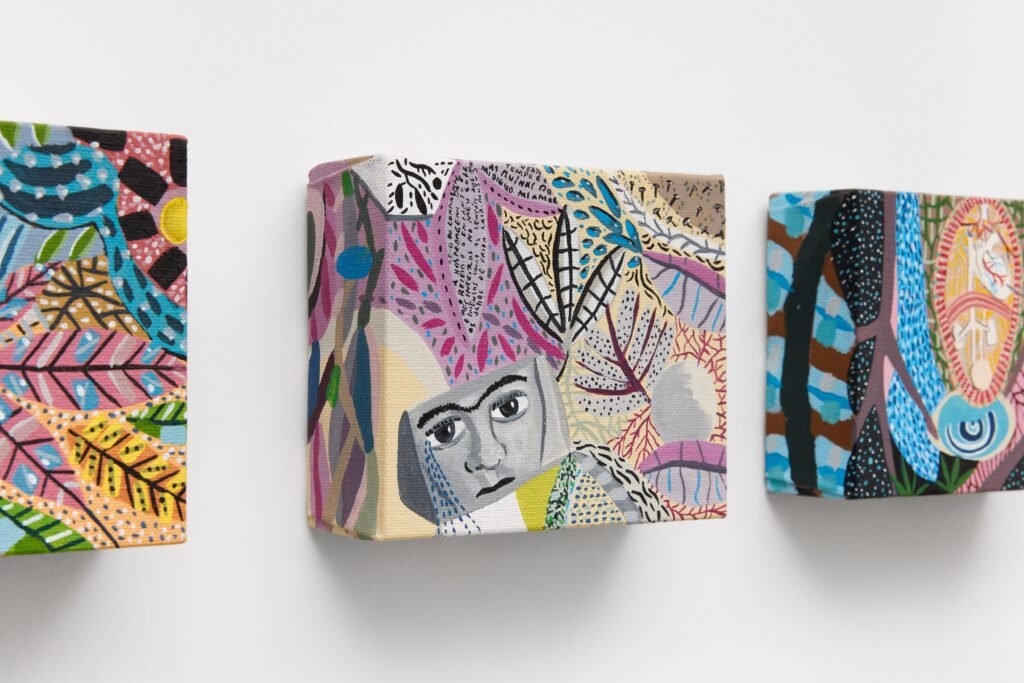
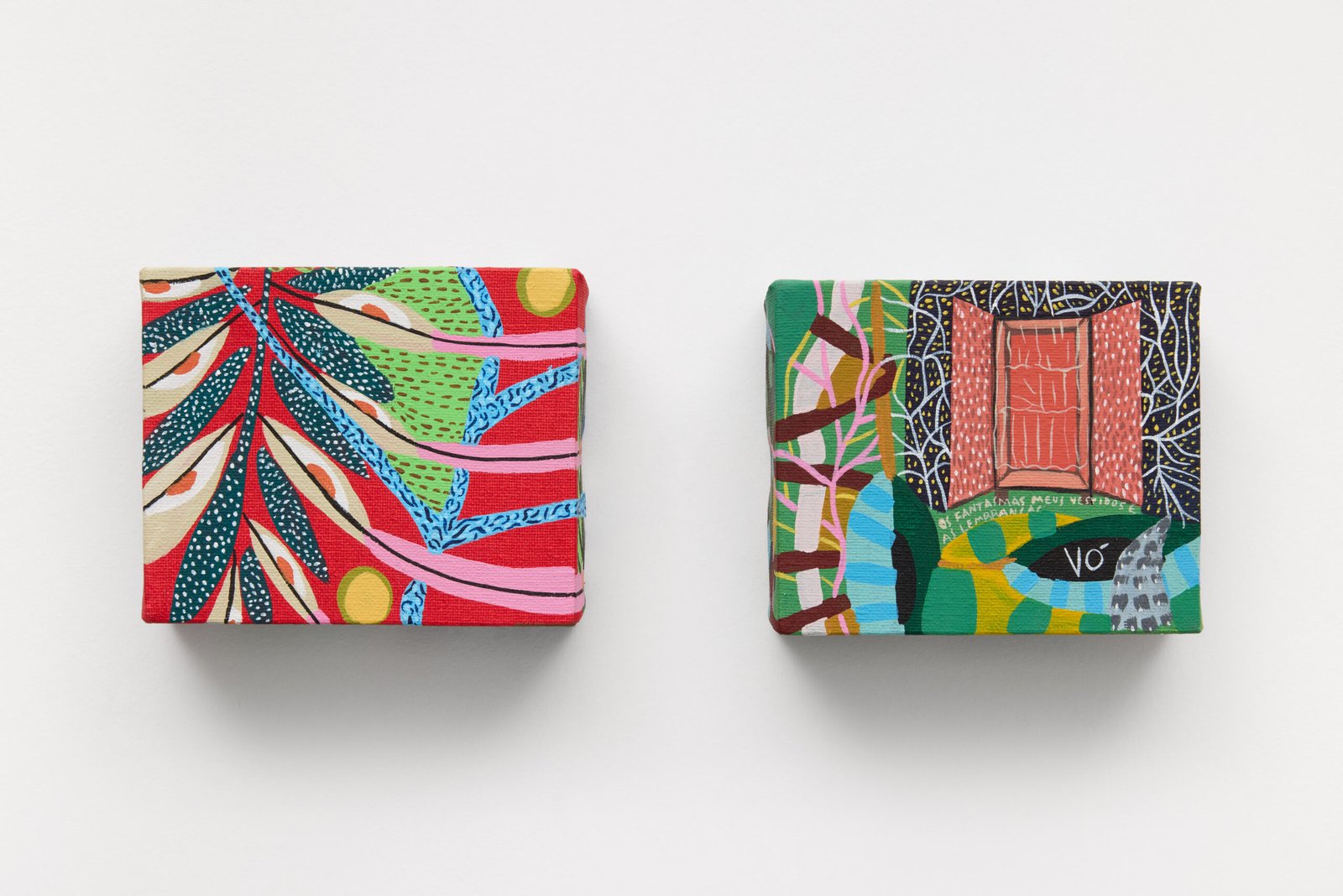
Among the works presented, the paintings from the Cadouço series stand out — an archaic Portuguese word that can be understood as a hiding place. Organized as fragments of a visual diary, the works bring together portraits, landscapes, plant elements, texts, and found images in compositions that function as pathways of memory and desire. The canvases function as spaces of narrative condensation, where different times, characters, and references coexist in a state of constant displacement.
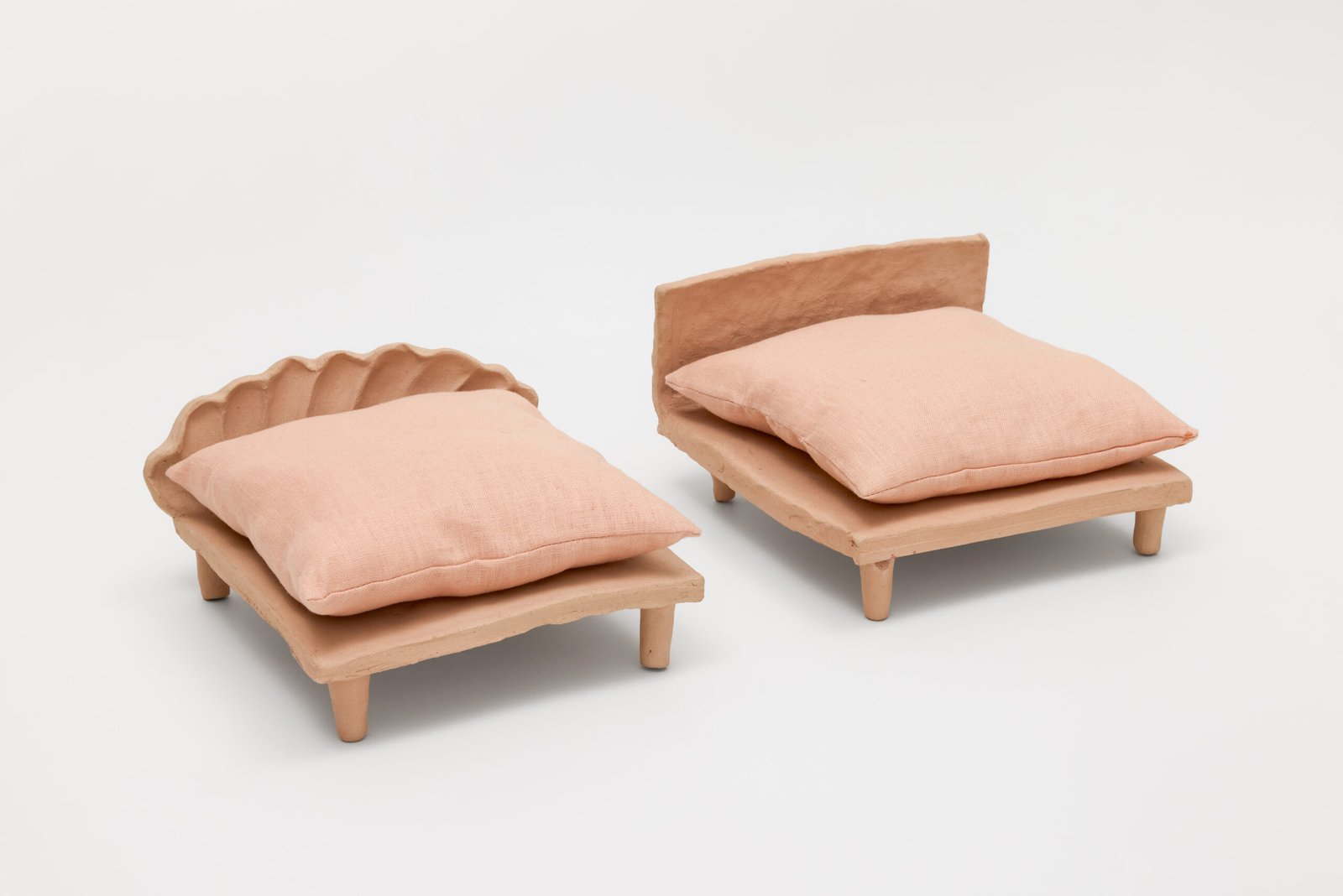
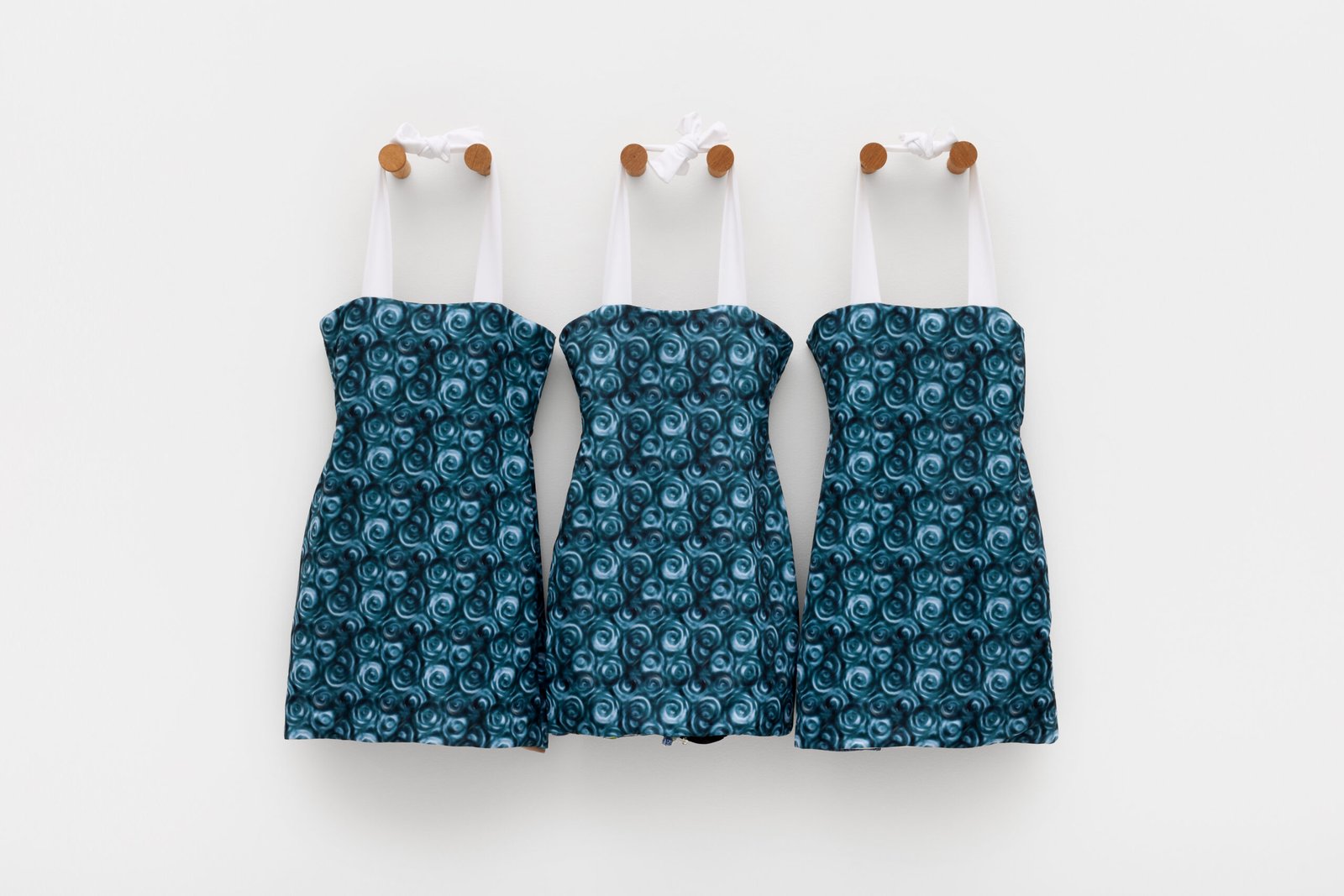
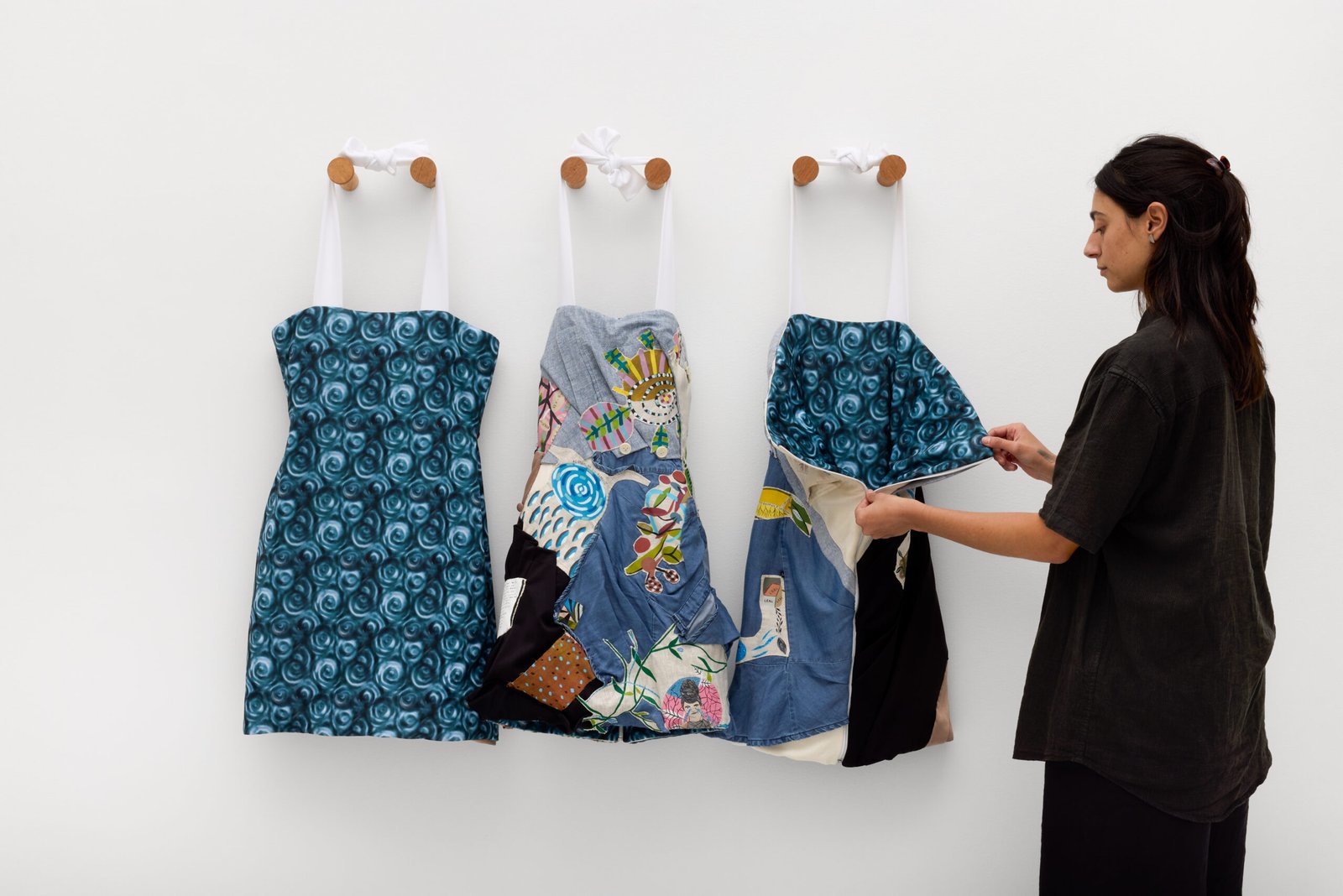
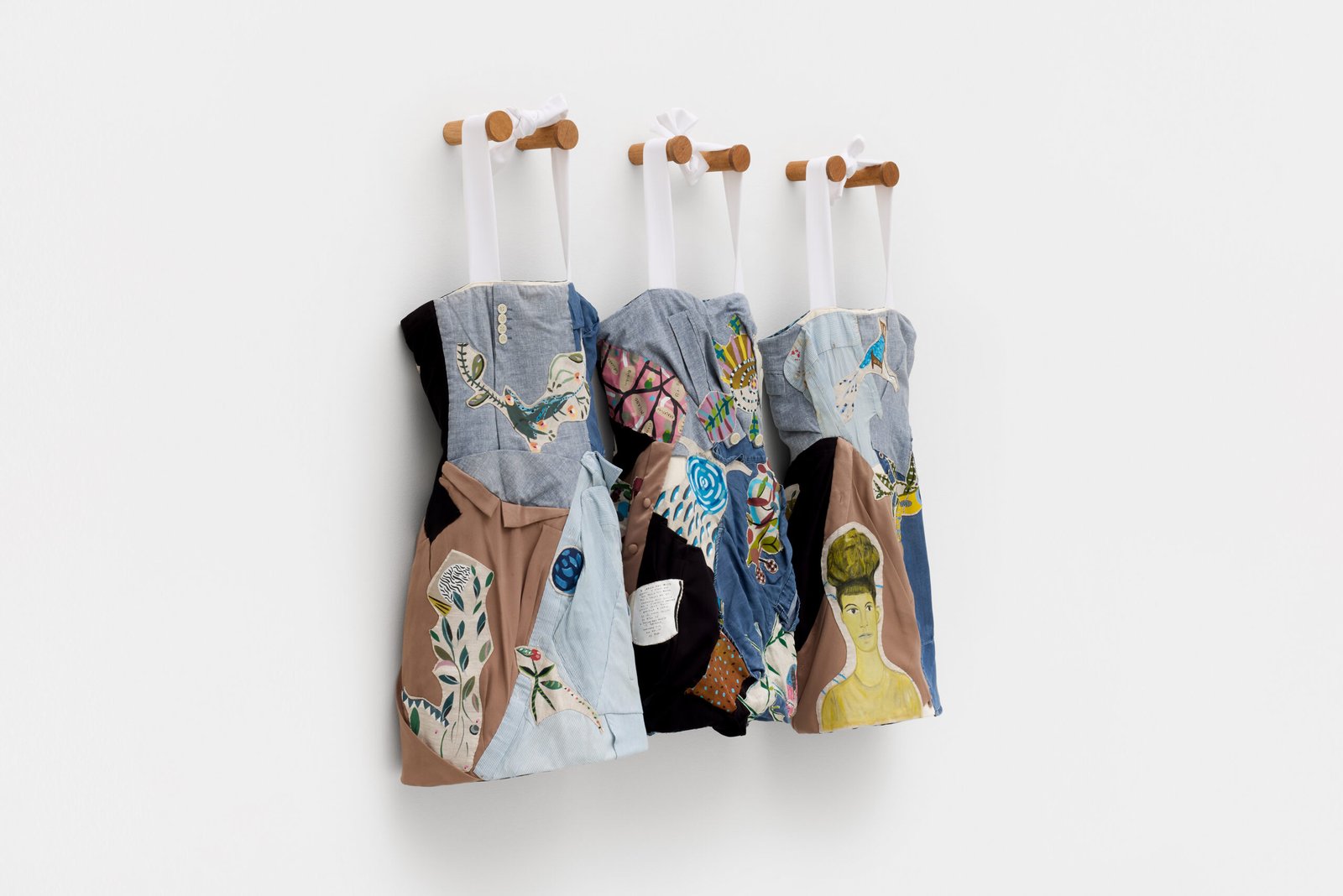
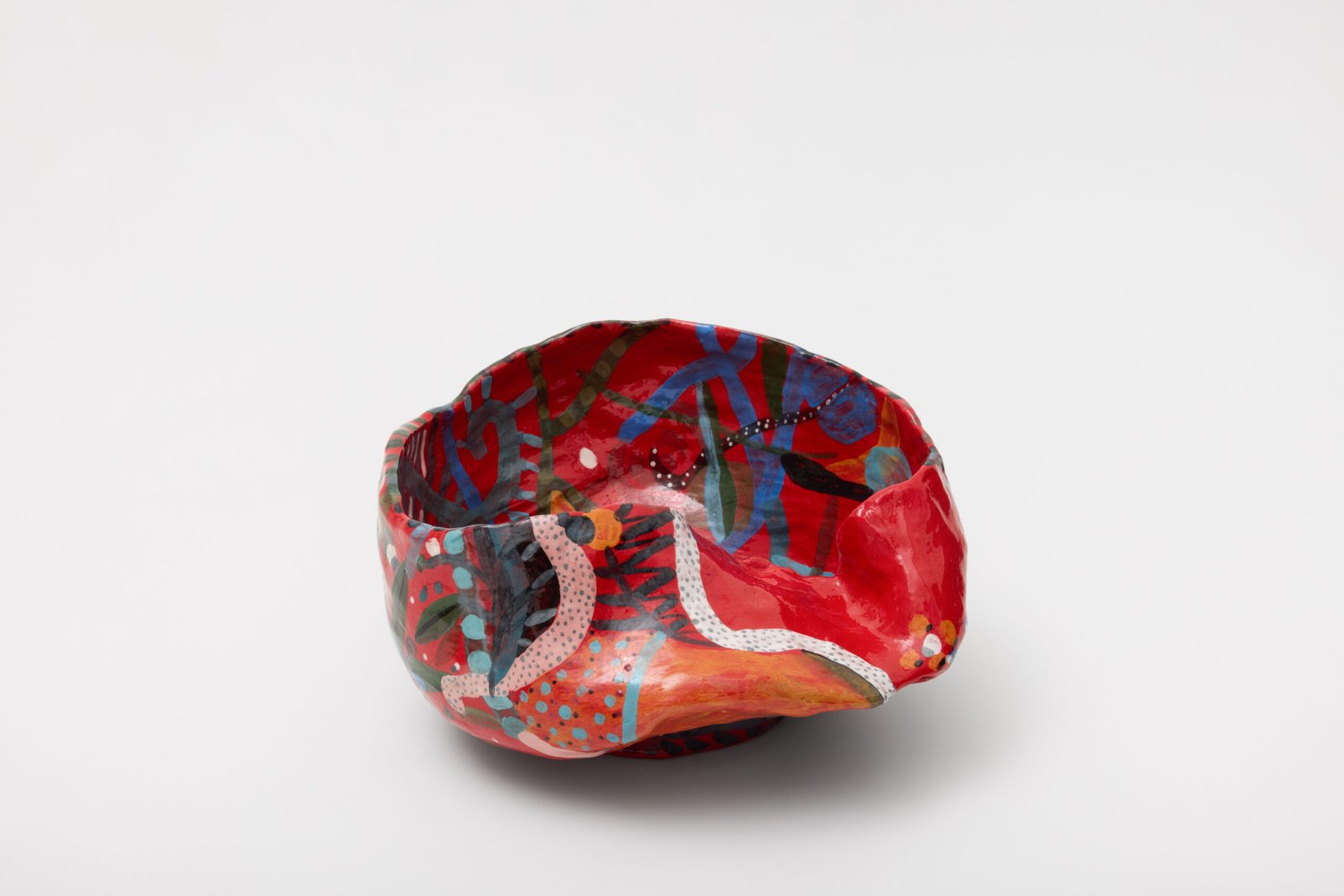
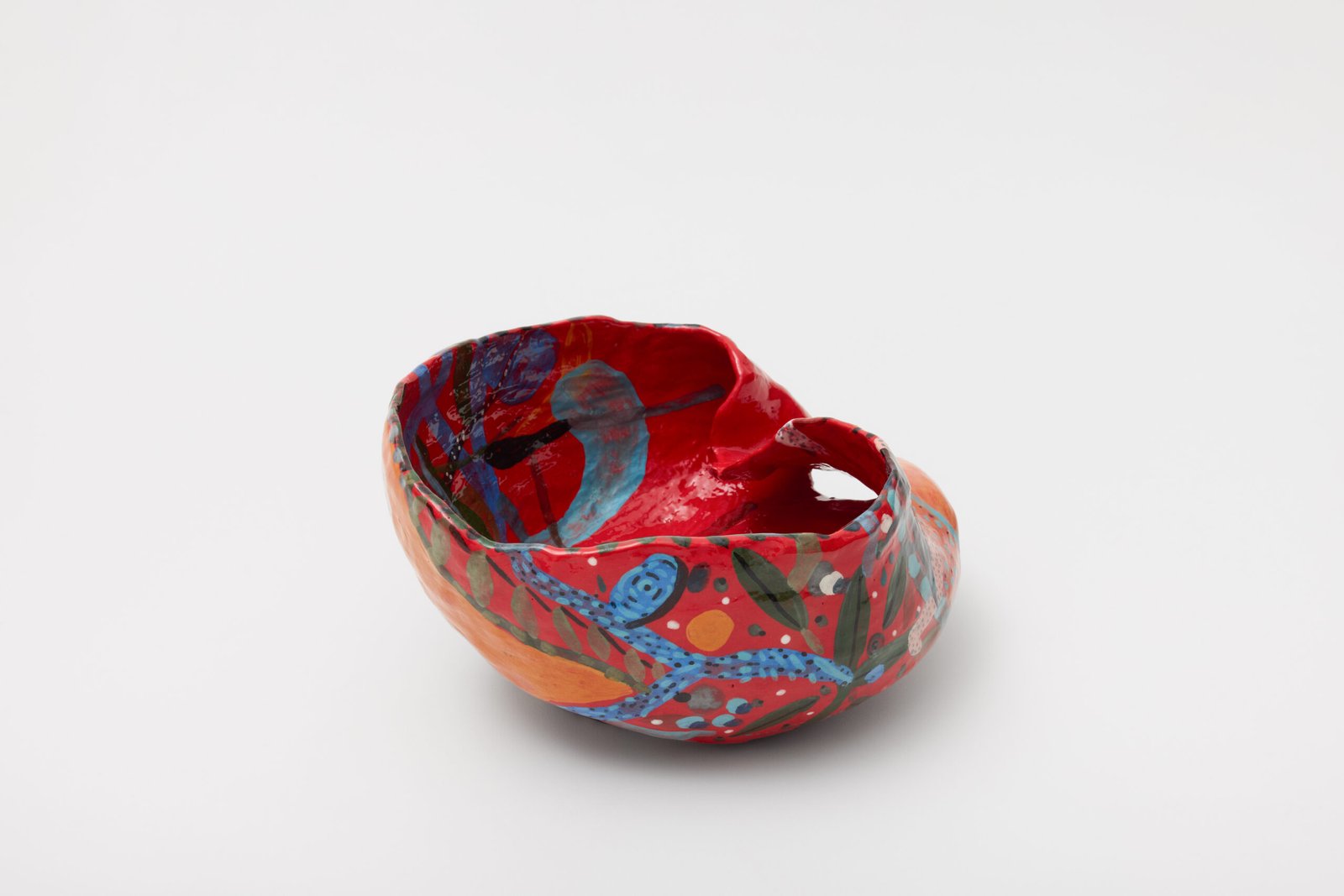
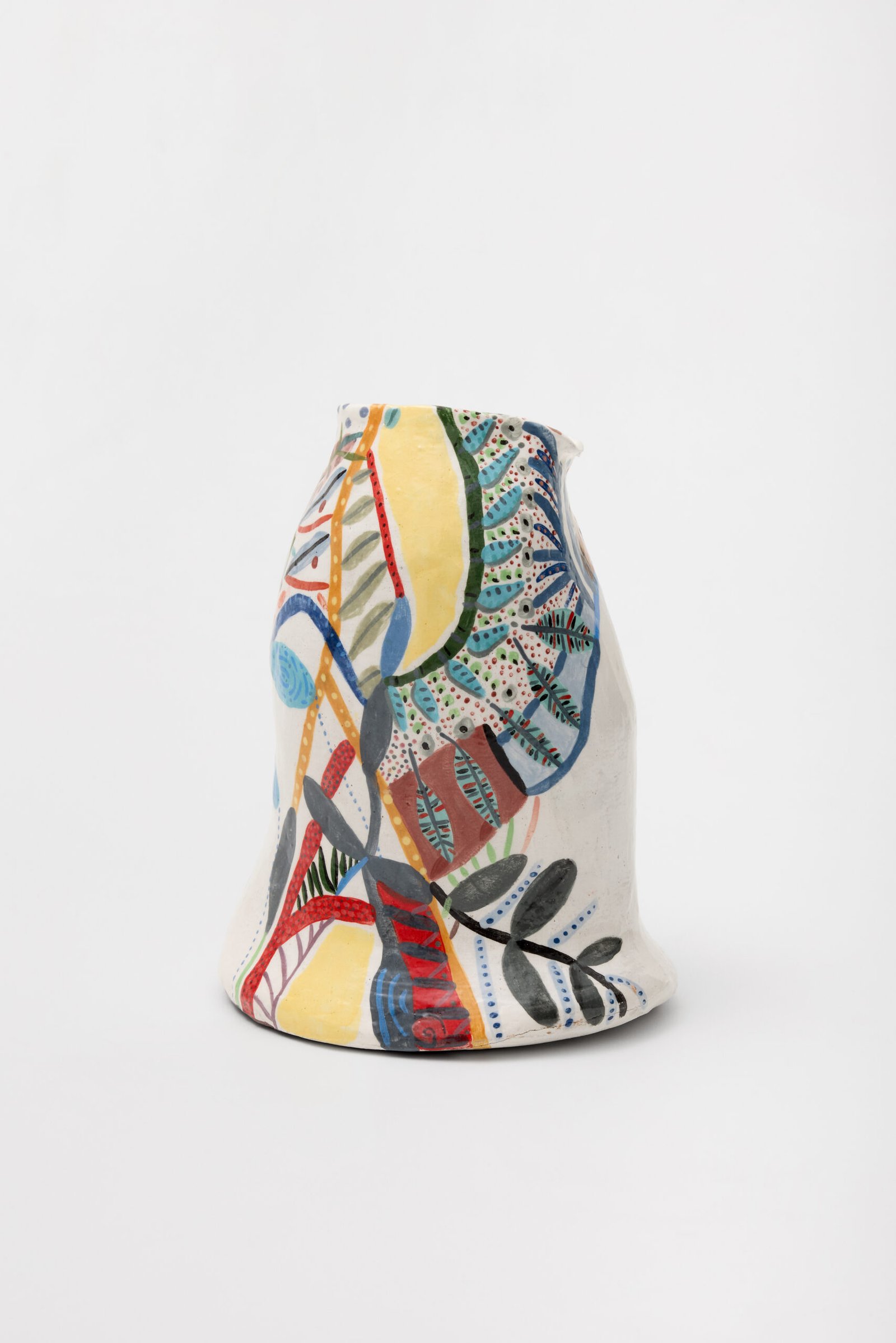
The exhibition also incorporates sculptures and installations constructed from inherited objects and household materials. Fabrics and garments are reworked through processes involving cutting, multiplication, and the reinterpretation of family remains which, when reconfigured by the artist, come to function simultaneously as emotional documents and fictional constructs. In these works, the home environment emerges as a space of transmission, absence, and storytelling, where intimate memories find collective resonance.
The photographs that run through the exhibition reinforce this atmosphere of suspension. Gardens, interiors, and everyday objects appear as images of an imprecise time, situated between remembrance, dream, and apparition. More than illustrating narratives, they expand the exhibition’s sensory field, proposing an experience marked by the coexistence of the intimate and the enigmatic. By bringing together different media and temporalities, As cascas da lua highlights one of the central aspects of Matheus Chiaratti’s research: the ability to transform fragments of life into open poetic constructions, in which memory, desire, and imagination remain in constant negotiation.